
Cookline Buildup
Heat can bake grease onto equipment exteriors, backsplashes, nearby walls, and hard-to-reach gaps. Cleaning may require degreaser dwell time, manual agitation, and repeated recovery rather than a quick spray and wipe.
Serving Riverside, California & surrounding areas
Open 24/7
Restaurant Kitchen Deep Cleaning · San Bernardino
Remove baked-on grease, food residue, and floor buildup with a detailed cleaning plan fitted to your kitchen, equipment, and operating schedule.
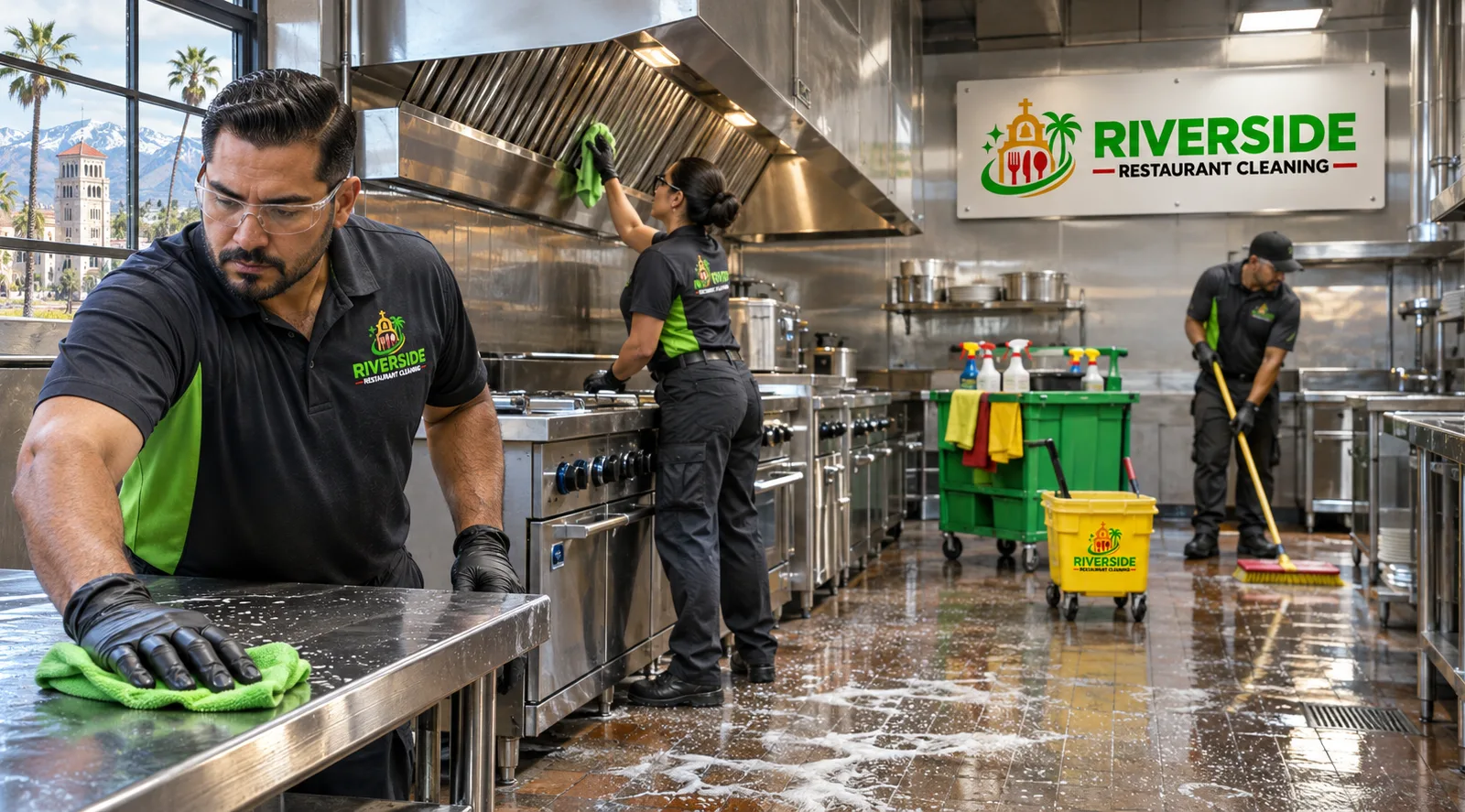
Restaurant Kitchen Deep Cleaning San Bernardino service addresses the buildup that routine closing work may leave behind. Grease aerosol settles on equipment sides, walls, pipes, shelving, and other surfaces near the cookline. Food debris collects beneath movable units and around floor edges. Grout lines and textured flooring can hold oily residue even after repeated mopping.
Riverside Restaurant Cleaning provides a planned, hands-on cleaning service for restaurant kitchens in San Bernardino. Our crew works through an agreed scope rather than applying the same checklist to every facility. Drawing on our experience as an experienced restaurant team in Riverside, we coordinate the work around access requirements, equipment placement, and the time available before the kitchen returns to operation.
A walkthrough identifies the areas that need the most attention and clarifies what can be safely moved or cleaned in place. The written scope can distinguish included surfaces, exclusions, preparation duties, and scheduling needs. This helps managers understand what will happen before work begins.
Cleaning Scope
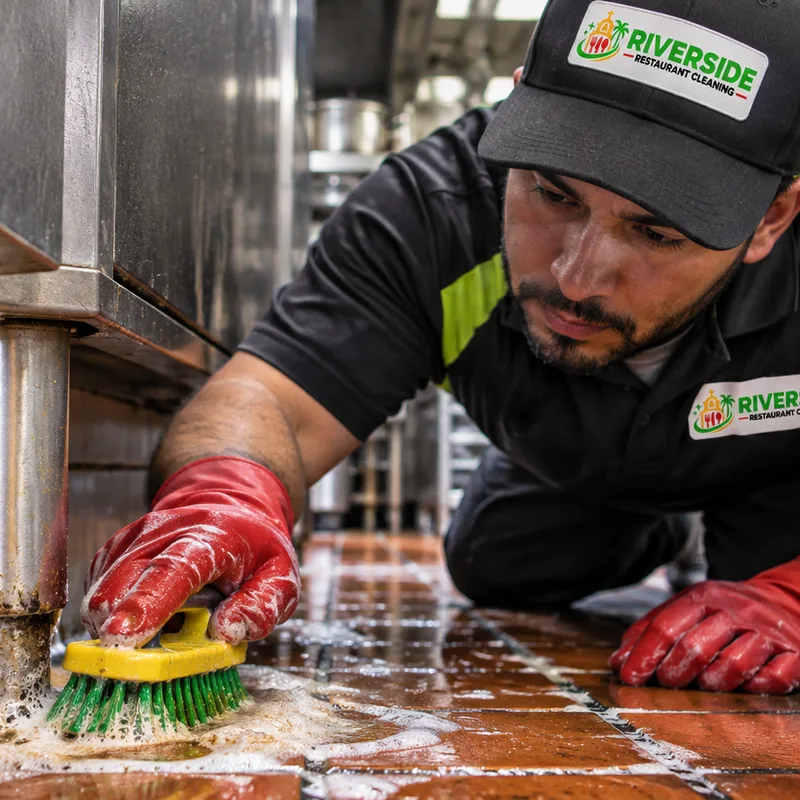
The exact scope depends on the kitchen layout and the condition of its surfaces. Common work areas include stainless steel exteriors, equipment legs and casters, backsplashes, shelving, walls near cooking stations, doors, baseboards, floor edges, and accessible spaces beneath movable equipment. Degreasing chemistry is selected for the soil and surface, then given appropriate dwell time before agitation and removal.
Detail work matters around corners, joints, kick plates, and utility penetrations because ordinary mops and wiping cloths do not reach them well. Crews may use scrapers, brushes, microfiber tools, wet vacuums, or commercial floor machines where the material and access permit. Food-contact surfaces require suitable products and proper rinsing or sanitizing steps according to product directions and the agreed scope.
Kitchen exhaust systems need separate attention. Cleaning visible hood exteriors is different from cleaning grease ducts and exhaust fans, which is specialized work. The scope should clearly state whether any hood-related surfaces are included so operators can coordinate other qualified vendors when necessary.
Condition Priorities
Heat can bake grease onto equipment exteriors, backsplashes, nearby walls, and hard-to-reach gaps. Cleaning may require degreaser dwell time, manual agitation, and repeated recovery rather than a quick spray and wipe.
Food debris and oily soil collect beneath movable fryers, ranges, prep units, and shelving. Access is confirmed first because gas, electrical, water, and restraint connections can limit safe movement.
Doors, kick plates, baseboards, corners, and wall-floor transitions often retain splashes that routine floor work misses. These details can make a major difference in the finished appearance.
Commercial kitchen floors can develop a bonded grease film that ordinary mopping redistributes. Proper chemical selection, agitation, soil recovery, rinsing, and drying are needed for a more complete result.
Floor Care
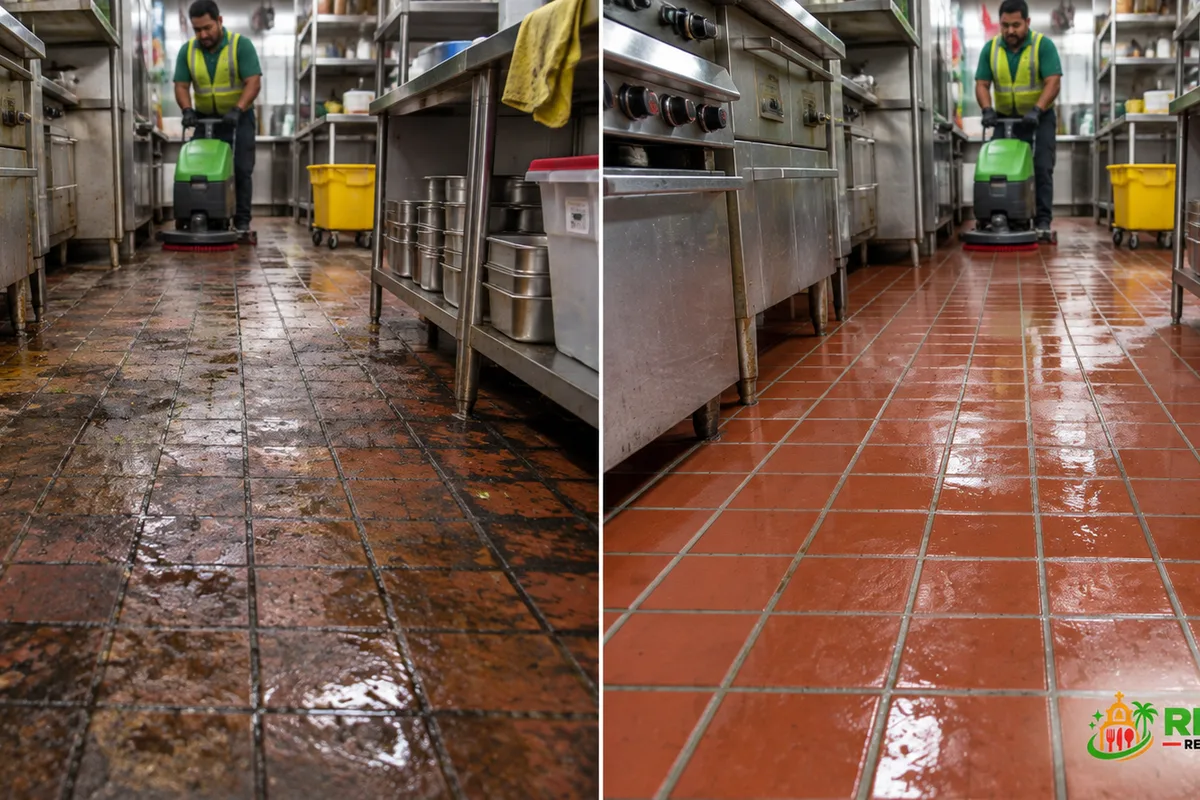
Restaurant Floor Cleaning San Bernardino work should begin with the flooring material, not a one-product-fits-all approach. Quarry tile and cementitious grout may tolerate methods that would be unsuitable for resilient flooring or damaged transitions. A pre-inspection identifies loose tiles, open grout joints, failing cove base, damaged drains, and areas where liquid must be carefully controlled.
Dry debris is removed before a compatible degreaser is applied. Dwell time allows the chemistry to loosen oily soil, while brushes or a floor machine agitate textured surfaces and grout lines. The suspended soil is then recovered rather than pushed toward an uncontrolled area. Rinsing removes cleaner and residue, and the floor is left to dry before normal traffic resumes.
Slip resistance depends on the floor material, its condition, contamination, and maintenance. Deep cleaning can remove grease films, but it cannot repair worn texture, cracked tile, failing grout, drainage problems, or an unsuitable floor coating. Those conditions should be documented so the operator can arrange the appropriate repair.
Five-Step Service Process
Step 1 of 5
The crew reviews the cookline, floors, walls, equipment access, utilities, drains, and sensitive materials. Managers can identify problem areas and confirm which equipment may be moved.
Step 2 of 5
Included surfaces, preparation duties, exclusions, access time, and the target completion window are documented. Scheduling can be planned after closing or during another approved period to reduce conflict with food preparation.
Step 3 of 5
Food, utensils, smallwares, and exposed ingredients must be removed or protected as agreed. Equipment is shut down, cooled, and isolated when required, and surrounding areas are prepared for controlled chemical and water use.
Step 4 of 5
Technicians apply surface-appropriate products, allow needed dwell time, agitate stubborn deposits, and clean accessible details. Floor soil is recovered and rinsed so loosened grease is removed from the work area.
Step 5 of 5
The finished areas are checked against the agreed scope. Any inaccessible area, damaged surface, or maintenance concern observed during cleaning can be documented for the restaurant manager.
Pricing Factors
Restaurant kitchen deep cleaning in San Bernardino typically costs about $800 to $3,500, while large, heavily soiled, or complex kitchens may cost more. A smaller floor-focused visit may fall near the lower end; an extensive cookline, wall, equipment-exterior, and floor scope is priced higher.
Final price depends on kitchen size, grease level, flooring, equipment density, access, water controls, required crew time, and whether equipment can be moved safely. Overnight scheduling and extensive hand scraping can also affect labor. The exact cost is confirmed after a walkthrough or detailed scope review.
Local Operations
San Bernardino restaurants operate in several distinct commercial settings. Downtown locations may have limited loading access or shared service areas, so arrival, waste handling, and equipment staging should be settled in advance. Hospitality businesses near the National Orange Show Event Center may need cleaning scheduled around event traffic and irregular operating hours. Kitchens near San Bernardino International Airport or along major commercial corridors may run extended shifts, which makes shutdown and cooldown time part of the plan.
Warm Inland Empire conditions can add to heat around active cooklines, but the practical issue is scheduling: hot equipment must cool before technicians can safely reach adjacent surfaces or apply cleaning products. Managers should also allow enough drying time before employees return carts, mats, or stored goods to cleaned floors.
A deep clean supports routine sanitation but does not replace the restaurant's daily food-safety program, pest-control plan, equipment maintenance, or any inspection required by the San Bernardino County Department of Public Health. Cleaning should fit those responsibilities, with clear separation between general degreasing, sanitizing food-contact areas, and specialized exhaust-system work.
Scope and Scheduling
A smaller kitchen may be completed in one scheduled shift, while a large or heavily soiled facility can require more time or phased work. Equipment density, grease thickness, floor condition, access, and the approved scope determine the schedule. San Bernardino operators should also account for equipment cooldown, surface drying, and reopening preparation.
Yes, after-hours scheduling may be arranged when crew access, building rules, security, utilities, and completion time are confirmed in advance. Restaurants with shared service corridors or restricted loading access should identify those limits during the walkthrough. The kitchen must be prepared and cooking equipment must be cool enough to clean safely.
Floor cleaning can remove grease and cleaner residue, but it cannot correct every cause of a slippery floor. Worn texture, damaged tile, failing grout, standing water, drainage defects, unsuitable coatings, and fresh spills may remain safety concerns. The crew can document visible defects, while repair decisions stay with the operator or property manager.
Only equipment identified during planning should be moved, and connected units should not be shifted without considering gas lines, electrical cords, plumbing, casters, and restraint systems. Staff can usually remove food, pans, smallwares, floor mats, and portable items. The agreed preparation list should state who handles each task.
Deep cleaning can help address visible grease, food debris, and soil within the contracted scope, but it does not guarantee an inspection result. The San Bernardino County Department of Public Health regulates local food facilities, and each operator remains responsible for applicable food-safety, sanitation, maintenance, and correction requirements.
The right interval depends on cooking volume, menu, grease production, hours of operation, floor texture, and the effectiveness of daily cleaning. A high-output fry line may need focused degreasing more often than a light-preparation kitchen. A walkthrough can identify which areas need recurring attention and which can be handled on a longer cycle.
A clear walkthrough and written scope make it easier to plan access, protect food-service operations, and focus labor on the areas with the heaviest buildup.
Call for a Free QuotePlan the Work Before Service
Share the kitchen size, flooring type, equipment layout, problem areas, and preferred service window. Riverside Restaurant Cleaning will discuss the scope and preparation needed before work starts.