Restaurant Cleaning · Riverside

Restaurant Cleaning Services In Riverside

Keep guest-facing spaces, restrooms, bars, floors and back areas ready for every shift with a cleaning scope built around your restaurant's hours and traffic.

✓Guest-facing detail care ✓Operating-hour planning ✓Clear scope confirmation
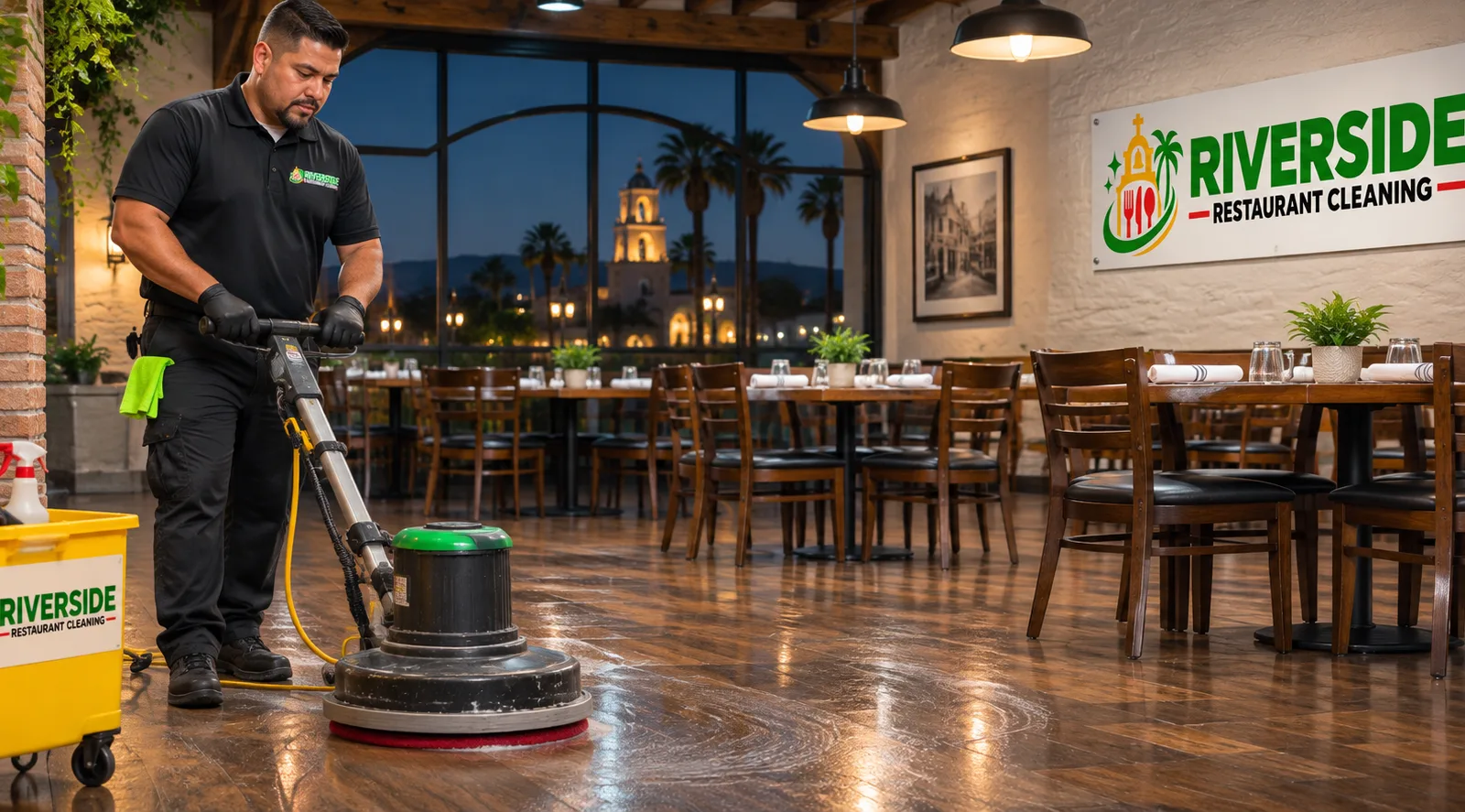
A professional cleaner servicing the polished dining-room floor of a Riverside restaurant after closing, with clean tables and fixtures visible.
Dining room and front-of-house care · Riverside

Restaurant Cleaning That Fits Your Operation

Restaurant Cleaning Services should support the way your dining room, bar and work areas actually operate. Riverside Restaurant Cleaning builds the scope around your floor plan, service schedule, traffic and priorities rather than applying the same checklist to every property. For restaurants near our W Linden Street base and across the surrounding commercial districts, Riverside's local restaurant service coordinates recurring work around their operations.

A dining room may need nightly floor care and detailed attention to booths, chair legs and host stations. A bar may need residue removed from rails, stools and floor edges. Restrooms call for cleaning, disinfection, replenishment and odor control. High surfaces collect dust that eventually settles into guest areas, so vents, ledges and accessible overhead fixtures should be addressed on a planned rotation.

Riverside's dry, dusty conditions can bring fine soil through entrances and loading areas. That affects matting, floor edges, baseboards and low horizontal surfaces, especially during periods of wind. Restaurants near Downtown Riverside may also have dense pedestrian traffic and older commercial layouts, while University Avenue businesses can face service patterns tied to nearby campus activity. A practical plan accounts for those conditions without disrupting opening, closing or food preparation.

Request a Callback

Included Areas

What Our Restaurant Cleaning Services Cover

The cleaning scope can coordinate guest areas, floors, bars, restrooms and agreed back areas around your operating schedule.

Dining Area Cleaning

Tables, chair frames, booths, partitions, host stations, windowsills, baseboards and touchpoints are cleaned according to the agreed scope. We pay close attention to crumbs and residue along booth seams, furniture feet and wall edges.

Front Of House Cleaning

Entry doors, waiting areas, counters, service stations and other visible surfaces receive consistent care. Fingerprints, tracked soil and debris are removed so the space presents well when the next shift begins.

Restaurant Floor Cleaning

Floor work is matched to the surface. The process may include vacuuming, sweeping, damp mopping or machine scrubbing, with attention to corners and edges where grease and soil tend to collect.

Restaurant Bar Cleaning

The scope can cover bar tops, fronts, rails, stools, shelving exteriors, floor edges and accessible fixtures. Product, glassware and food-contact equipment remain subject to the restaurant's handling procedures.

Restroom Cleaning

Toilets, urinals, partitions, sinks, mirrors, dispensers, floors and common touchpoints are cleaned and disinfected. Consumable checks and replenishment can be incorporated when supplies are provided.

Back Of House Cleaning

Service corridors, storage-area floors, employee areas and other agreed non-cooking spaces can be included. Commercial kitchen equipment, exhaust systems and regulated hood work require their own clearly defined scope.

Request a Callback

Surface-Specific Floor Care

Restaurant Floor Cleaning by Surface and Soil Type

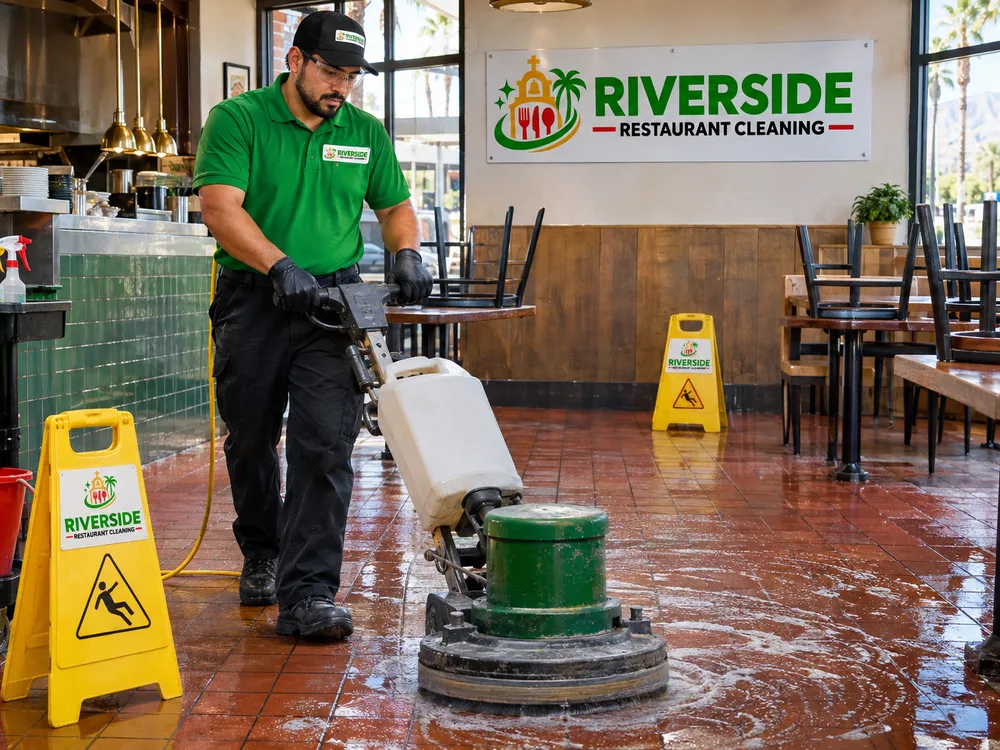
A restaurant cleaner using a commercial floor machine on quarry tile after service, with wet-floor signs and dining furniture moved safely aside.
Floor methods are selected for the surface, finish and type of soil.

Restaurant floors do not all respond to the same chemical or machine. Quarry tile and grout may hold oily residue in textured surfaces. Luxury vinyl tile can be damaged by unsuitable chemicals or aggressive abrasion. Sealed concrete, ceramic tile, rubber flooring and carpet each need a compatible process. Before recurring service begins, the floor type, finish condition, drainage, access and typical soil load should be identified.

Loose debris is removed first so it is not spread through wet cleaning. Greasy areas may require dwell time with a suitable degreaser, followed by agitation and recovery. Dilution matters: excess chemical can leave a sticky film that attracts more soil and creates a poor appearance. Wet-floor signs and controlled access should remain in place until the surface is safe for normal use.

Entrances deserve special attention in Riverside because dry outdoor soil can quickly mark hard floors and fill carpet fibers. Effective mat placement, routine vacuuming and scheduled edge cleaning reduce the amount carried toward the dining room. Deep floor work can then be planned around closing times rather than attempted during guest traffic.

Request a Callback

Overhead Detail Work

High Dusting Without Sending Debris Into Service Areas

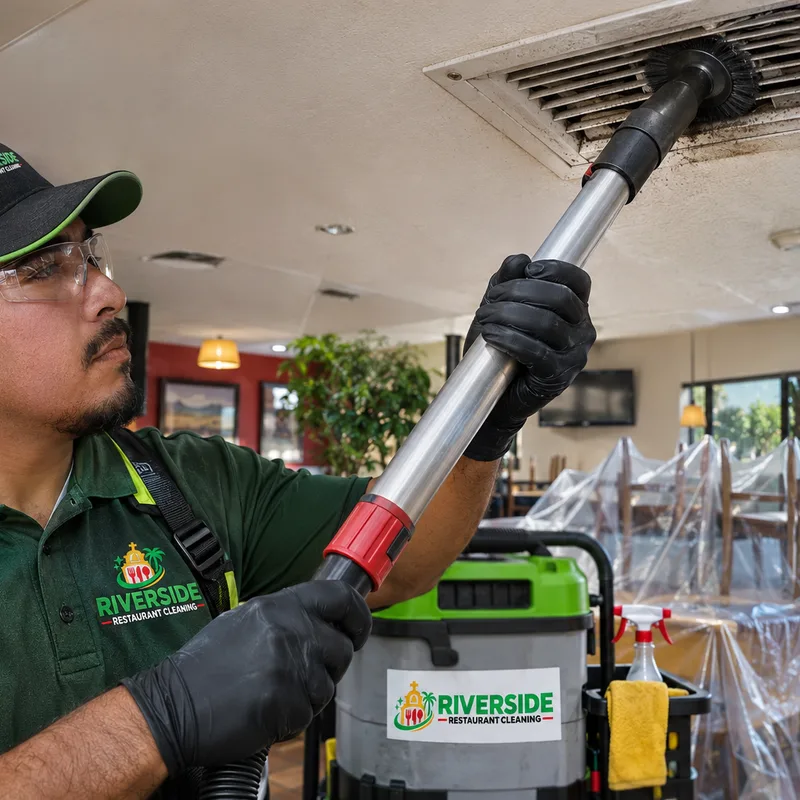
A trained restaurant cleaner using a long HEPA vacuum attachment to remove dust from an accessible overhead vent while the dining area is closed and protected.
High surfaces are cleaned before lower fixtures and floors.

High Dusting covers accessible vents, ledges, beams, pipes, ceiling fan housings and light-fixture exteriors that sit beyond ordinary wiping height. These surfaces should be inspected before work begins because access, ceiling height and nearby equipment affect the method. Stable extension tools or suitable access equipment are used according to the conditions.

The work is normally scheduled when food is covered or removed and guest areas are clear. HEPA-filtered vacuum attachments and microfiber tools help capture dust rather than scatter it. Cleaning proceeds from high surfaces toward lower ones, with furniture, counters and floors cleaned afterward. Delicate fixtures and electrical components need appropriate handling, and inaccessible or specialized systems may require a separate contractor.

A rotation can keep overhead buildup manageable without treating every high surface on every visit. Restaurants with open ceilings, decorative beams or prominent hanging fixtures may need more frequent attention than rooms with smooth, enclosed ceilings.

Request a Callback

Five-Step Service Process

How We Build a Restaurant Cleaning Plan

  1. Step 1 of 5

    Walk the Property

    We review dining areas, entrances, bars, restrooms, floors and agreed back areas. Surface materials, access points, closing procedures and sensitive zones are recorded before the scope is written.

  2. Step 2 of 5

    Define Tasks and Frequency

    Daily priorities are separated from weekly, periodic and high-dusting work. The written plan identifies included spaces, expected condition and any exclusions that require specialized service.

  3. Step 3 of 5

    Set the Service Window

    Arrival and completion times are coordinated with closing, opening, deliveries and staff access. Alarm, key and lock-up procedures are documented when they apply.

  4. Step 4 of 5

    Clean in a Controlled Order

    Work generally moves from cleaner zones toward heavier-soil areas and from high surfaces toward floors. Color-coded cloths or tools can help keep restroom equipment separate from dining-area equipment.

  5. Step 5 of 5

    Review and Adjust

    The plan can be updated when hours, seating arrangements, traffic or seasonal needs change. Specific feedback is tied to the affected task so recurring service stays consistent.

Zone-Based Cleaning Controls

Front Of House, Restrooms and Back Areas Need Different Controls

Restaurant Dining Room Cleaning is presentation-sensitive. Guests notice smears on entrance glass, dust on ledges, debris around table bases and residue along booth edges. Restaurant Front Of House Cleaning in Riverside also has to account for tracked dust at entrances and the short turnaround between closing and the next opening. A zone-based checklist keeps visible details from being lost among larger floor tasks.

Restaurant Restroom Cleaning in Riverside requires a separate set of controls. Cleaning should proceed from lower-risk surfaces toward toilets and urinals, with tools kept separate from those used in dining spaces. The scope may include fixtures, partitions, mirrors, dispensers, touchpoints, floors and spot treatment around grout lines. Disinfectants need the label-specified contact time; wiping them away immediately can prevent the product from working as intended.

Restaurant Back Of House Cleaning in Riverside must be clearly defined because employee corridors and storage floors differ from cook lines, food-contact surfaces, grease interceptors and exhaust hoods. We identify the included areas during the walkthrough. Hood and duct cleaning, pest control and other regulated specialty work should be assigned to qualified providers rather than folded into a general janitorial checklist.

Request a Callback

Pricing Factors

How Much Do Restaurant Cleaning Services Cost in Riverside?

Recurring restaurant cleaning in Riverside typically costs about $0.12 to $0.35 per square foot per visit, while smaller or heavily soiled locations may be priced at a higher effective rate. Periodic floor scrubbing and high dusting are often quoted separately.

Final pricing changes with square footage, service frequency, floor material, restroom count, soil and grease levels, ceiling access, supply responsibilities and the time available after closing. A written scope also clarifies exclusions such as hood systems or specialized kitchen equipment. The exact cost is confirmed after an on-site walkthrough.

Request a Callback

Bring your floor plan, operating hours and problem areas to the walkthrough. We will turn them into a written cleaning scope with clear frequencies, access requirements and exclusions.

Call for a Free Quote

Scope and Scheduling

Questions Riverside Restaurant Operators Ask

Can restaurant cleaning be scheduled after closing?+

Yes, service can be planned around closing and opening times when staffing and property access allow. The walkthrough should cover entry, alarm, lock-up and completion requirements, along with deliveries or prep shifts that may overlap the cleaning window.

How often should Restaurant Floor Cleaning be scheduled?+

Floor care frequency depends on traffic, floor material and the type of soil produced by the operation. A Riverside restaurant with frequent tracked dust may need daily vacuuming or mopping at entrances, while machine scrubbing, grout attention or carpet extraction can follow a periodic schedule based on observed buildup.

Is High Dusting included in recurring restaurant service?+

High dusting can be included as a rotating task or quoted as periodic work after ceiling height and access are reviewed. Open ceilings, beams, vents and hanging fixtures often require different tools, and the work should occur when food and guest areas are protected.

Do you clean commercial kitchens and exhaust hoods?+

General back-area cleaning can include agreed floors, corridors, employee areas and accessible exterior surfaces, but commercial hood and duct cleaning is specialized work that should be stated separately. The on-site review identifies food-contact equipment, cooking systems and regulated areas that fall outside the janitorial scope.

What determines the price of Front Of House Cleaning?+

The main price factors are cleanable square footage, seating density, floor type, restroom count, service frequency, soil level and the available cleaning window. Booth-heavy dining rooms, detailed bars and properties with extensive glass or overhead fixtures usually require more labor than open layouts.

Can you clean a restaurant before an inspection or reopening?+

A focused detail cleaning may be scheduled when availability and the requested scope allow, but cleaning does not guarantee an inspection result. For a Riverside reopening, identify the deadline, access conditions and priority areas early so there is time to distinguish general cleaning from repairs, pest work or regulated specialty services.

Who provides liners, paper products and cleaning supplies?+

Supply responsibility is agreed before service begins. The restaurant may provide paper goods and liners while the cleaning team provides approved chemicals and tools, or another arrangement can be documented. Product compatibility and any required Safety Data Sheets should be confirmed during setup.

Plan the Work Around Your Operation

Build a Cleaning Plan Around Your Restaurant

Tell Riverside Restaurant Cleaning about your operating hours, dining-room layout, floors, restrooms, bar and back areas. We will review the property and prepare a practical scope for recurring or periodic service.