
Cook Line and Prep Areas
Detailing can cover accessible equipment exteriors, prep tables, shelving, splash areas, walls, floor edges, casters, and spaces beneath movable items.
Serving Riverside, California & surrounding areas
Open 24/7
Restaurant Deep Cleaning · Riverside
Detailed cleaning for commercial kitchens, walk-in coolers, overhead surfaces, dining areas, and the hard-to-reach spaces routine shifts leave behind.
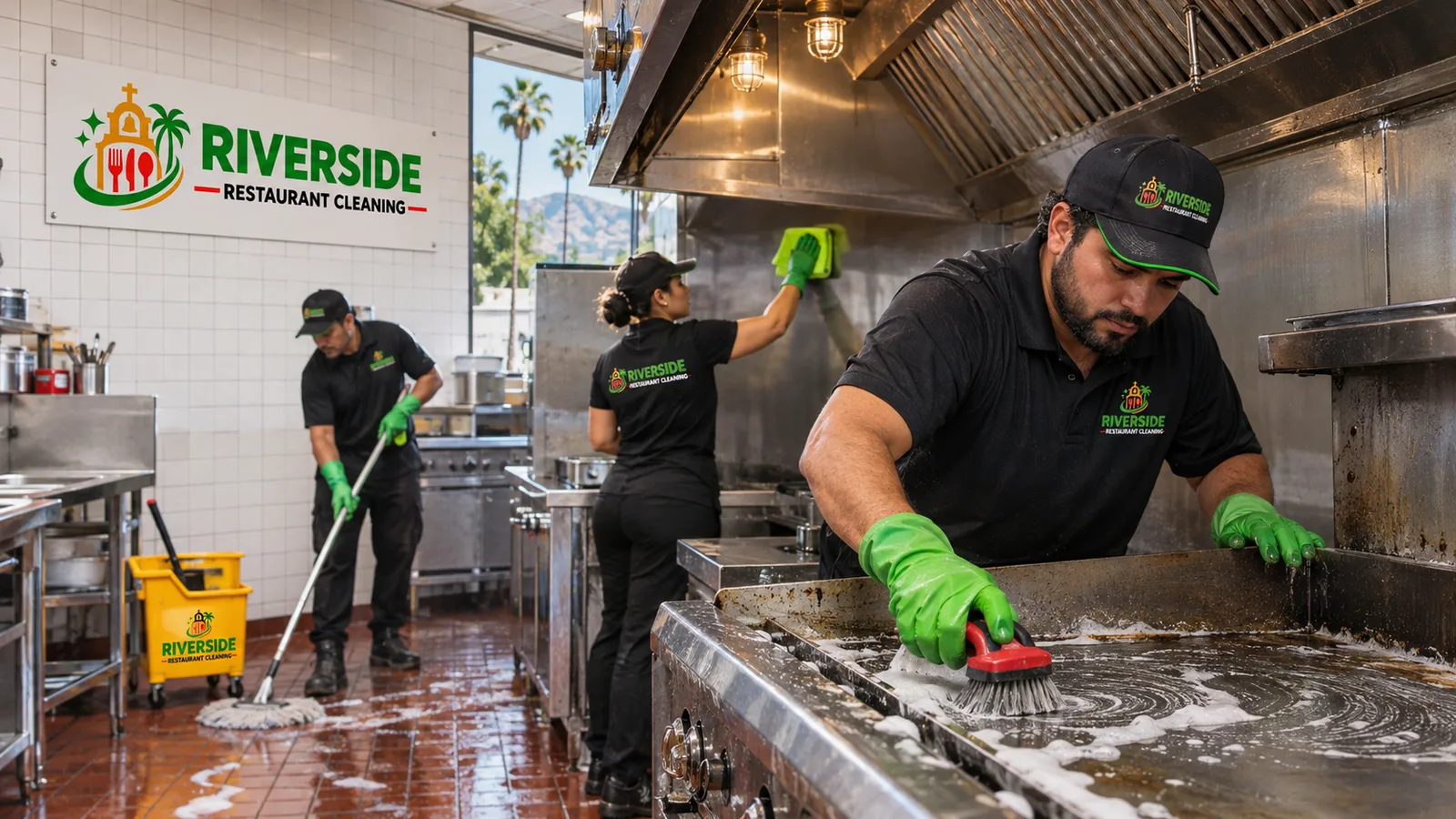
A restaurant needs more than a quick wipe-down after closing. Grease migrates behind equipment, crumbs collect beneath prep lines, cooler shelving develops residue, and dust settles on vents, pipes, and ledges. Riverside Restaurant Cleaning handles these areas through planned deep cleaning that complements the work completed by your regular closing crew.
Our work is organized around the condition, access, and operating schedule of each facility. We are restaurant specialists serving Riverside, CA who assess the kitchen layout, identify priority areas, and define which equipment can be moved or cleaned in place before work begins. The resulting scope may cover food-preparation areas, cook lines, walk-in units, storage rooms, dining spaces, restrooms, and high surfaces.
Restaurants near Downtown Riverside may need scheduling that accounts for evening service and pedestrian activity. University Avenue businesses near UC Riverside often work around changing meal periods and late hours. In the Magnolia Center area, freestanding restaurants and shopping-center locations can have different loading, parking, and equipment-access conditions. These details affect crew arrival, staging, and the order in which areas are cleaned.
Kitchen Detail Work
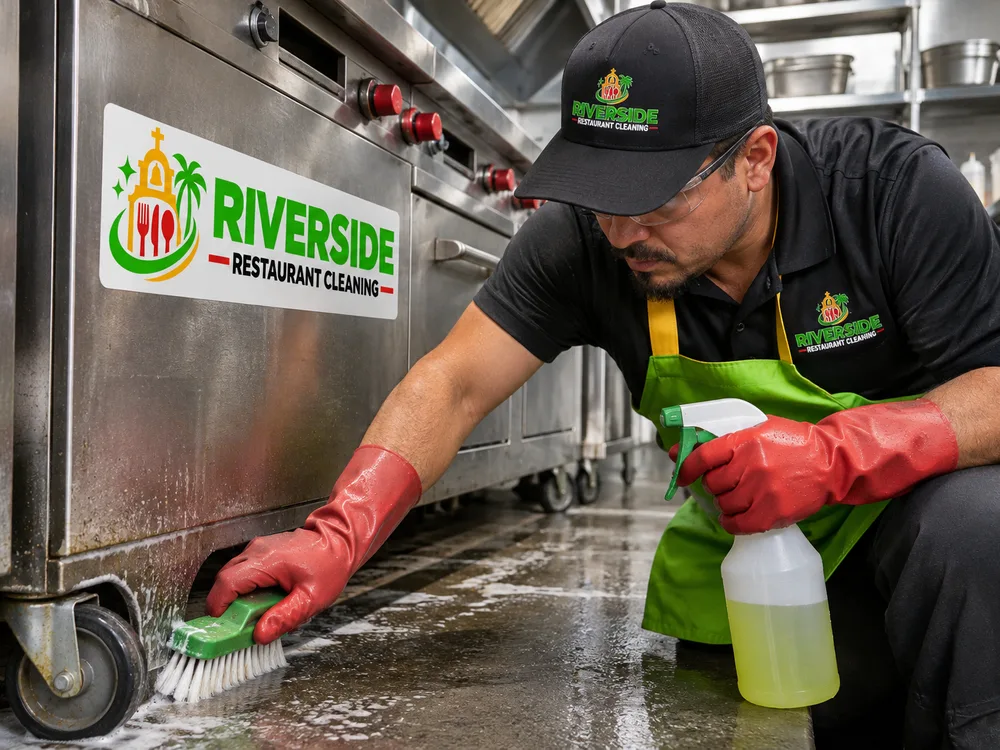
Kitchen deep cleaning targets built-up soil that ordinary shift cleaning does not fully remove. Work can include degreasing walls and washable surfaces, scrubbing floors and grout lines, cleaning equipment exteriors, detailing casters and legs, and removing debris from accessible spaces beneath or behind appliances.
A professional restaurant deep cleaning plan starts with surface compatibility. Stainless steel needs nonabrasive tools and wiping with the grain. Quarry tile and grout may require agitation and controlled dwell time. Painted walls, plastics, rubber gaskets, and sealed flooring each call for suitable products and methods. Food-contact surfaces must be rinsed or otherwise treated according to the cleaning product label before they return to use.
Cleaning around cooking equipment also requires clear boundaries. Deep cleaners can address accessible grease on equipment exteriors, surrounding walls, floors, and removable components included in the agreed scope. Internal hood ducts, fire-suppression components, electrical repairs, pest treatment, and equipment servicing require the appropriate specialist and should not be assumed to be part of general restaurant detailed cleaning.
Facility-Wide Scope
Detailing can cover accessible equipment exteriors, prep tables, shelving, splash areas, walls, floor edges, casters, and spaces beneath movable items.
Shelves, walls, doors, handles, gaskets, and floors can be cleaned after food is removed or securely protected. Product rotation, disposal, and refrigeration repair remain under restaurant management unless separately arranged.
Degreasing, agitation, edge work, and controlled rinsing remove residue from suitable kitchen flooring. The method is selected for the floor material, drainage, and soil level.
High dusting addresses accessible vents, pipes, ledges, light housings, ceiling fans, and structural surfaces where dust can settle over work or dining areas.
Detailed care may include table bases, chair legs, booths, partitions, ledges, washable wall marks, floors, and other touchpoints that affect the guest-facing space.
Fixtures, partitions, dispensers, floors, break areas, dry storage, and service corridors can be added so the scope reflects the whole operation rather than the cook line alone.
Specialized Access Planning
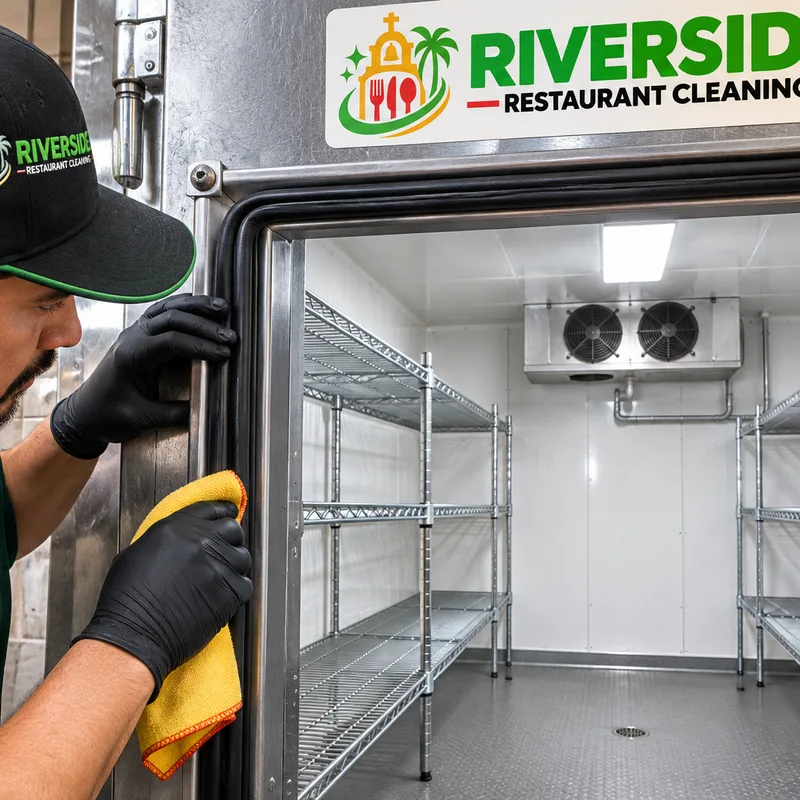
Walk-in cooler cleaning should be coordinated with food storage and temperature control. Restaurant staff generally need to remove, consolidate, or protect inventory before cleaning begins. The crew can then work through approved shelving, wall panels, floor surfaces, door hardware, and gasket folds without disrupting product organization. Standing water must be controlled, and cleaning products should never be mixed.
High dusting in Riverside restaurants presents a different access problem. Vents, conduits, pipes, ceiling edges, and suspended fixtures may sit over preparation or seating areas. The work area needs to be cleared or protected before dust is disturbed. Suitable extension tools or access equipment are selected after ceiling height and obstructions are reviewed. Air-conditioning use during the region's hot weather can contribute to dust collecting around supply and return vents, so those areas deserve attention during the walkthrough.
Neither task should be improvised during a busy shift. A written plan identifies who handles inventory, which overhead areas are reachable, what must be protected, and how long surfaces need before staff can re-enter the work zone.
Five-Step Service Process
Step 1 of 5
We review the kitchen, cooler, storage, dining, restroom, and high-access areas that need attention. Soil level, surface materials, equipment clearance, water access, drainage, and operating hours are documented.
Step 2 of 5
The written scope identifies included surfaces, exclusions, access needs, and any preparation required from restaurant staff. It also clarifies whether equipment will remain in place or be moved by authorized personnel.
Step 3 of 5
Work is planned for an agreed service window, often after closing or during a planned shutdown. Cleaning zones are sequenced to reduce interference with food storage, opening duties, and employee access.
Step 4 of 5
Crews remove dry debris, apply compatible products, allow appropriate dwell time, agitate built-up soil, and rinse or wipe as the product and surface require. Tools are managed to reduce cross-contamination between restrooms, dining areas, and kitchens.
Step 5 of 5
The finished areas are checked against the agreed scope. Any access limitation or condition that needs equipment service, repair, pest control, or another specialty trade is reported to the restaurant contact.
Scope and Scheduling
A useful estimate depends on more than square footage. The number of cooking stations, grease accumulation, grout condition, cooler contents, ceiling height, equipment mobility, floor drains, and loading access all affect labor and setup. A compact kitchen with a heavily used fry line may require more detailed work than a larger space with light food preparation.
Frequency also depends on use. A one-time reset may suit a reopening, management change, renovation cleanup, or kitchen that has fallen behind. Recurring detailed cleaning can rotate demanding areas so they do not all need attention during one service window. For example, one visit may emphasize the cook line and floors, while a later visit addresses walk-in units, storage shelving, and high dusting.
Riverside's warm periods can make off-hours kitchen work physically demanding, particularly when cooking equipment has only recently shut down. Adequate cool-down time, safe access, and ventilation should be considered when setting the start time. Restaurants in shopping centers may also need to account for property access rules, gates, shared loading areas, or limits on late-night activity.
Before approving work, ask for a clearly defined scope rather than a vague promise to deep clean everything. It should identify rooms and surfaces, describe preparation duties, state exclusions, and establish how completion will be reviewed.
Get a written cleaning scope based on your kitchen layout, operating hours, priority areas, and access conditions before work is scheduled.
Call for a Free QuoteScope and Scheduling
Restaurant deep cleaning is usually priced after a walkthrough because labor can vary sharply between facilities. Kitchen size, grease level, equipment clearance, cooler shelving, ceiling height, floor condition, access, and the requested service window all affect the estimate. A written quote should identify the included zones and any preparation expected from your staff.
Yes, after-hours cleaning can be arranged when crew access, building rules, and the required completion time are confirmed in advance. Downtown Riverside locations, shopping-center tenants, and late-service restaurants may face different parking, gate, loading, or property-management conditions. The schedule should also allow hot equipment to cool before nearby surfaces are cleaned.
Food generally needs to be removed, consolidated, or securely protected before walk-in cooler cleaning begins. Restaurant management should decide how inventory is handled and maintain safe storage temperatures throughout the work. The exact preparation depends on whether shelves, walls, gaskets, floors, or the entire accessible interior are included.
General kitchen deep cleaning should not be assumed to include internal exhaust ducts, fans, fire-suppression components, or code-required hood service. The surrounding hood exterior, backsplash, wall, and accessible equipment surfaces may be included if listed in the scope. Internal grease-exhaust systems require properly qualified service and separate documentation.
A focused cleaning may fit within one off-hours service window, while a larger or heavily soiled facility may need phased work. The timeline depends on crew access, the number of zones, grease buildup, cooler preparation, high-access work, drying time, and the restaurant's reopening deadline. A walkthrough provides the most reliable schedule.
Yes, high dusting can cover reachable vents, pipes, ledges, light housings, and ceiling-level surfaces after the area is cleared or protected. Ceiling height, suspended equipment, occupied spaces, and safe access determine the method. Food, utensils, prep surfaces, and guest areas must be protected from falling dust during the work.
Staff should complete the preparation listed in the approved scope, which may include securing food, clearing counters, identifying equipment that may be moved, and providing access to water, drains, electrical controls, and locked areas. Riverside shopping-center locations should also confirm gates, loading access, and any after-hours property rules before the scheduled start.
Define the Work Before Service
Describe the areas that need attention, your operating schedule, and any access limits. Riverside Restaurant Cleaning will help define a practical scope for your kitchen, walk-in cooler, high surfaces, and guest areas.