
Pipes, Conduit, and Beams
Horizontal runs and upper edges collect settled dust. Access is planned around valves, wiring, sprinkler components, and food-preparation areas.
Serving Riverside, California & surrounding areas
Open 24/7
Restaurant High Dusting · Moreno Valley
Remove accumulated dust and residue from pipes, beams, vents, ledges, and other hard-to-reach surfaces without disrupting normal kitchen operations.
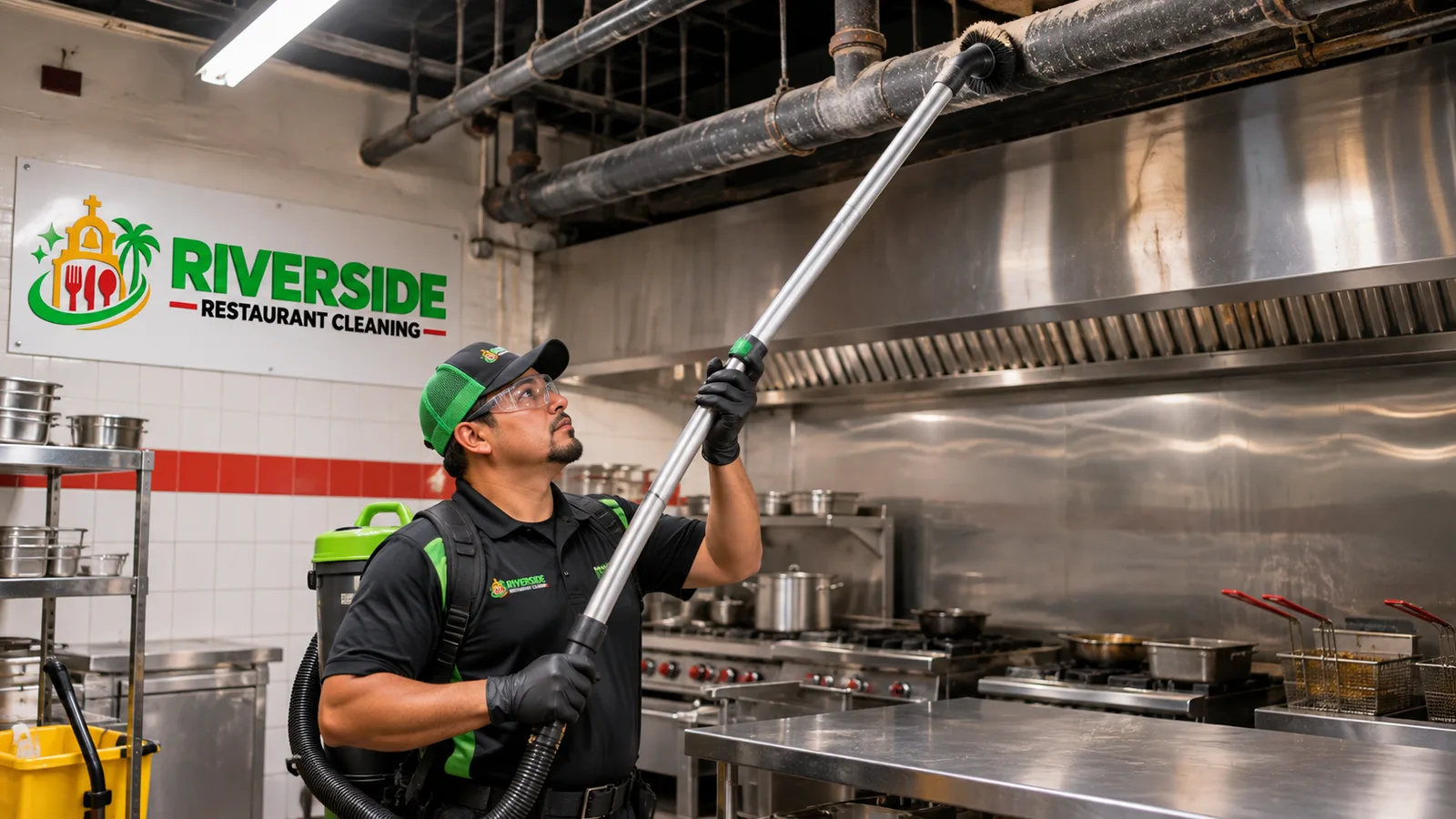
Restaurant High Dusting Moreno Valley removes buildup from surfaces that routine wiping and floor care cannot reach. Common targets include exposed ductwork, ceiling vents, sprinkler pipes, conduit, light housings, wall tops, structural beams, and the upper faces of refrigeration or storage units. These areas can collect dry dust, lint, and aerosolized residue over time.
Riverside Restaurant Cleaning begins by identifying elevated surfaces, access limits, sensitive equipment, and work zones. The written scope separates high dusting from unrelated work so managers know which surfaces are included. Our team brings the same careful planning to Moreno Valley commercial kitchens, with attention to containment, equipment protection, and practical scheduling.
Our team works from its Riverside base on W Linden Street and serves restaurants in nearby Moreno Valley. That short regional connection helps with early, late, or phased appointments when the kitchen cannot release every work area at once.
Elevated Surface Scope
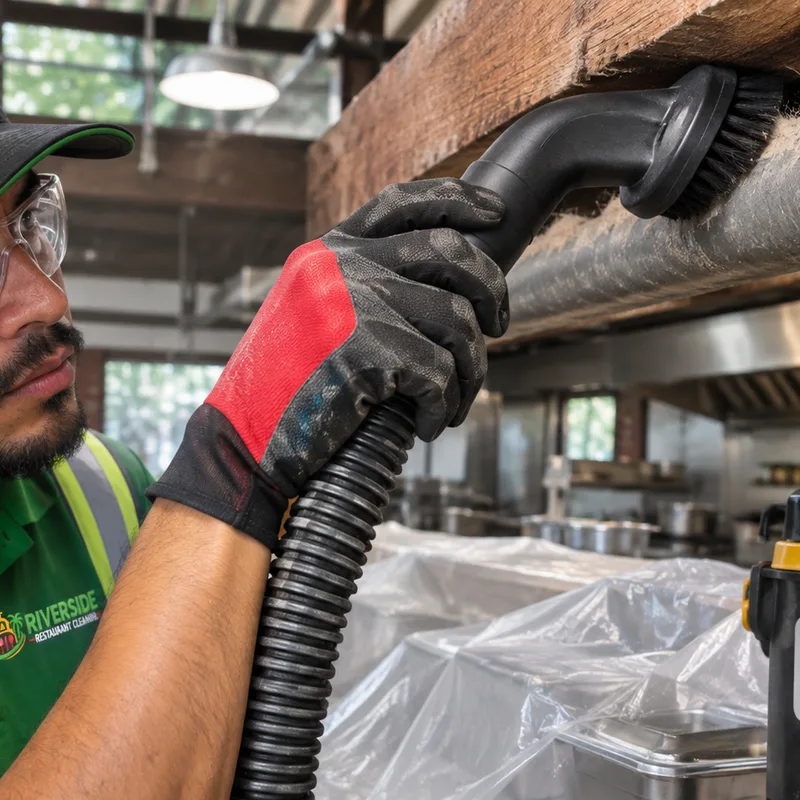
A high-dusting scope is built around surfaces that are elevated, awkward to reach, or commonly missed during daily cleaning. Technicians may use commercial vacuums fitted with HEPA filtration, extension poles, microfiber tools, and controlled damp wiping where the surface allows it. Vacuum capture is often preferred for loose debris because it limits the amount displaced into the room.
Typical targets include ceiling corners, return-air grilles, supply diffusers, horizontal pipe runs, cable trays, conduit, beam flanges, fan guards, light fixtures, and the tops of tall equipment. The crew also checks whether a surface is safe to touch and whether electrical, fire-suppression, or ventilation components require restricted methods.
High dusting does not replace hood, duct, or exhaust-fan cleaning. Grease-exhaust systems require their own access, methods, and service scope. It also does not include opening electrical fixtures, moving energized equipment, or disturbing damaged ceiling material without prior review.
Included Overhead Areas
Horizontal runs and upper edges collect settled dust. Access is planned around valves, wiring, sprinkler components, and food-preparation areas.
Accessible exterior faces of supply diffusers, return grilles, and vent covers are vacuumed or wiped without opening mechanical systems.
Reachable exterior housings and ledges are cleaned with methods suited to the fixture. Technicians do not open or work inside energized components.
Upper wall ledges, corners, and trim lines are detailed where lint and dust gather outside the normal wiping zone.
The upper surfaces of refrigerators, shelving, cabinets, and similar units can be included when they are stable and safely accessible.
Exposed rafters, decorative ledges, high signs, and elevated surfaces near counters may be added when the restaurant needs a wider overhead scope.
Local Access Planning
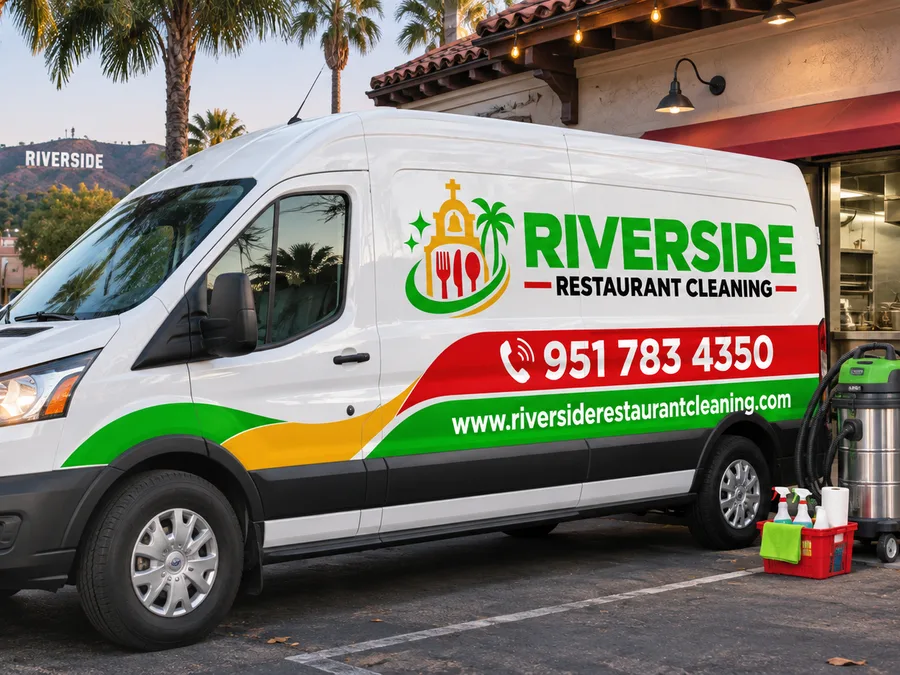
Moreno Valley restaurants range from freestanding locations along major commercial corridors to compact units in shopping centers. Access conditions differ. A dining room with exposed rafters needs a different setup than a narrow cook line with low pipes, fixed equipment, and limited ladder clearance. The walk-through accounts for ceiling height, floor space, customer areas, loading access, and the time available before food preparation resumes.
Southern California's dry periods can increase tracked and airborne dust, especially around frequently opened doors, pickup counters, and receiving areas. Kitchen exhaust and air movement may then carry fine material toward upper surfaces. The appropriate cleaning frequency depends on the building, operating hours, ventilation, cooking volume, and past maintenance rather than a fixed calendar.
High dusting is one part of restaurant kitchen cleaning in Moreno Valley when overhead buildup is the immediate concern. Work zones are defined so the crew can protect exposed preparation surfaces and avoid unnecessary movement through cleaned areas.
Five-Step Service Process
Step 1 of 5
The crew confirms the rooms, overhead surfaces, ceiling heights, equipment layout, and any areas that must remain available. Damaged materials and restricted components are flagged before cleaning.
Step 2 of 5
The plan identifies included surfaces, access equipment, protection measures, and a work window. Larger kitchens can be divided into zones to fit production, deliveries, and closing routines.
Step 3 of 5
Food, utensils, and exposed preparation surfaces must be removed or covered as appropriate. The crew positions access equipment and controls the area beneath each overhead work zone.
Step 4 of 5
Technicians use extension vacuum tools, microfiber heads, or controlled wiping based on the surface and residue. Work generally proceeds from higher areas toward lower ledges.
Step 5 of 5
The crew inspects the included surfaces, removes protective materials, and checks the immediate work area. Managers can review any inaccessible or excluded location noted during service.
Work-Zone Safety
High dusting requires more than a long-handled duster. Ladder placement, overhead obstacles, floor conditions, and equipment clearance all affect how a surface can be reached. A safe plan may use extension tools from floor level, commercial step ladders, or other suitable access equipment. Chairs, counters, food equipment, and improvised platforms are not appropriate access tools.
Containment matters because dislodged debris can settle on worktables, smallwares, and appliances. Before cleaning begins, the restaurant should remove food and movable utensils from the work zone. Fixed surfaces may be protected, and vacuum attachments can capture loose material at its source. After overhead work, lower surfaces within the affected zone may need a final wipe as specified in the scope.
Technicians should not alter sprinkler heads, disconnect alarms, enter grease ducts, or open electrical and HVAC components during routine high dusting. If an area presents damaged insulation, unstable ceiling material, an active leak, pest evidence, or heavy grease saturation, the condition should be documented and referred to the appropriate qualified provider.
Site-Specific Pricing
Restaurant high dusting is usually priced after reviewing the size of the work area, ceiling height, amount and type of buildup, access restrictions, and number of elevated surfaces. A compact dining room with open access may take less preparation than a full kitchen containing closely spaced equipment, pipe networks, and multiple ceiling levels.
Other cost drivers include whether service must occur overnight, whether equipment needs extensive protection, and whether the work will be completed in one visit or phased by zone. Loose dry dust is generally different to address than adhered residue. Grease-heavy conditions may require a separate assessment because ordinary high-dusting tools are not designed for exhaust-system cleaning or thick deposits.
A site review supports an accurate written scope. It also gives the manager a chance to identify priority areas, operating limits, and surfaces that have been missed during routine cleaning.
Arrange a walk-through to identify the elevated surfaces, access requirements, and work window before restaurant high dusting begins.
Call for a Free QuoteScope, Access, and Scheduling
Pricing depends mainly on ceiling height, square footage, access, buildup, and the number of overhead surfaces. A Moreno Valley restaurant with exposed beams and open floor access may require a simpler setup than a crowded cook line with ducts, conduit, and fixed equipment. A walk-through is the most reliable way to establish the scope and confirm the cost.
Yes, closed-hour scheduling is often the most practical choice because food, guests, and active preparation must be kept away from the work zone. The exact window depends on setup time, kitchen size, and when the Moreno Valley location must resume preparation. Larger spaces can often be divided into planned zones.
A small, accessible area may be completed within one service window, while a large restaurant or difficult kitchen may require phased work. Ceiling height, dense utility runs, heavy buildup, and equipment protection all add time. The expected duration is set after the crew reviews the work areas.
No, routine high dusting does not include internal hood, grease-duct, or exhaust-fan cleaning. Those systems collect combustible grease and require a separate specialist scope. High dusting can address accessible exterior surfaces around the kitchen when they are safe to clean.
Frequency should be based on visible accumulation, cooking activity, ventilation, building design, and operating hours. Dry regional conditions, busy entrances, and frequent receiving activity can contribute to overhead dust. Periodic visual checks of beams, pipe tops, vent faces, and tall equipment help managers set an appropriate interval.
Staff should remove exposed food, utensils, and movable smallwares from the planned work zone. The restaurant should also identify alarms, sensitive equipment, access restrictions, and areas that cannot be taken out of service. Final preparation instructions are confirmed during scheduling.
Often, yes, provided the surface can be reached safely and the equipment can be protected. Tight clearances, hot appliances, energized components, or unstable access may limit the method. The crew assesses each Moreno Valley kitchen individually and records any excluded areas.
Define the Overhead Scope
Describe the overhead surfaces, kitchen layout, and preferred work window. Riverside Restaurant Cleaning will help define a practical scope for the areas routine cleaning cannot reach.